
Common Myths About Veneers (and the Truth)
Dental veneers are one of the most popular cosmetic dental treatments available today, and for good reason. They can transform a smile in just a few appointments, correcting everything from stubborn stains to chipped or uneven teeth. But despite their popularity, veneers are also one of the most misunderstood treatments in dentistry. Misinformation spreads quickly, especially on social media, and many patients walk into their consultations carrying fears that are based on outdated information or flat-out myths.
If you have been considering veneers but feel unsure because of something you read online or heard from a friend, you are not alone. At our Irvine dental office, Dr. Stan Chien regularly helps patients separate fact from fiction so they can make confident decisions about their smiles. In this article, we are breaking down the most common myths about dental veneers and sharing the truth backed by research, clinical experience, and real patient outcomes.
Thinking about transforming your smile with veneers? Schedule a consultation with Dr. Chien to learn which option is right for you.
Request Your Appointment Today
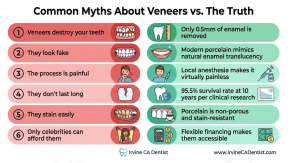
Myth 1: Veneers Destroy Your Natural Teeth
This is probably the biggest myth holding people back from getting veneers. The fear comes from viral social media posts showing teeth filed down to sharp, peg-like stumps. Those images look alarming, but they are almost always showing crown preparation, not veneer preparation. Crowns require removing tooth structure from all sides, often 1.5 to 2 millimeters around the entire tooth. Veneer preparation is fundamentally different.
The Truth About Enamel Removal
For traditional porcelain veneers, your dentist removes approximately 0.5 to 0.7 millimeters of enamel from the front surface of the tooth only. That is roughly the thickness of a fingernail or a contact lens. The preparation stays within the enamel layer in most cases, meaning the deeper dentin layer is not exposed. This small amount of reduction creates just enough space for the veneer to bond securely and sit flush with your adjacent teeth, preventing a bulky or unnatural appearance.
For patients who want an even more conservative approach, minimal-prep veneers require just 0.2 to 0.5 millimeters of enamel removal. In certain cases, no-prep veneers can be placed with little to no enamel reduction at all. These ultra-thin porcelain shells bond directly to the tooth surface and are an excellent option for patients with minor cosmetic concerns and well-aligned teeth.
It is important to understand that enamel removal for veneers is permanent. Your teeth will always need to be covered by veneers or another restoration going forward. But describing this as “destroying” your teeth is a significant exaggeration. A skilled cosmetic dentist like Dr. Chien carefully plans how much enamel to remove based on your specific tooth alignment, your desired result, and the type of veneer being placed. The goal is always to preserve as much natural tooth structure as possible while achieving the best outcome.
Myth 2: Veneers Look Fake and Unnaturally White
This myth has its roots in older veneer technology. Early veneers were made from a single, opaque block of porcelain. They looked flat, overly white, and clearly artificial. If you picture the stereotypical “Chiclet teeth” smile, that is what first-generation veneers sometimes produced. But cosmetic dentistry has come an incredibly long way since then.
How Modern Veneers Mimic Natural Teeth
Today’s porcelain veneers are crafted using advanced ceramics that replicate the light-reflecting properties of natural tooth enamel. Skilled dental lab technicians build modern veneers in multiple ultra-thin layers that mimic the depth, translucency, and subtle color variations found in real teeth. The edges of the veneers are made slightly translucent, just like the edges of your natural incisor teeth. Surface textures and ridges are incorporated to match the surrounding teeth perfectly.
Dr. Stan Chien does not simply pick a shade off a chart and send it to the lab. Our process involves careful evaluation of your facial features, skin tone, the color of your surrounding teeth, and your personal preferences. The goal is a result that looks like a naturally beautiful version of your own smile, not a one-size-fits-all Hollywood look. If you do see someone with overly white, uniform veneers, that is typically a deliberate style choice made by the patient, not a limitation of the technology. When done well, veneers are virtually indistinguishable from natural teeth.
Myth 3: Getting Veneers Is Painful
Fear of pain keeps many people from pursuing dental treatments they could benefit from, and veneers are no exception. The idea of having your teeth “filed down” sounds uncomfortable. But the reality is far more gentle than most patients expect.
What the Procedure Actually Feels Like
During the preparation appointment, your dentist uses local anesthesia to numb the area completely. You will feel pressure and vibrations as the enamel surface is lightly reduced, but you should not feel pain. The amount of enamel being removed is so minimal that some patients who receive no-prep or minimal-prep veneers do not even need anesthesia at all.
After the preparation, some patients experience mild sensitivity to hot or cold temperatures. This is usually temporary and resolves within a few days as the teeth adjust. Once the permanent veneers are bonded in place during the second appointment, any lingering sensitivity typically disappears entirely. The bonding appointment itself is painless. The veneers are placed with a specialized adhesive, adjusted for fit and comfort, and cured with a light to set the bond. Most patients describe the entire veneer process as far more comfortable than they expected, comparing it to a routine filling rather than a major procedure.
Myth 4: Veneers Do Not Last Long
Some people assume veneers are a temporary cosmetic fix that will need to be replaced every few years. This myth likely comes from confusion between porcelain veneers and composite veneers, which do have different lifespans. But even composite veneers last longer than most people think, and porcelain veneers can last for well over a decade.
What the Research Says About Veneer Longevity
A systematic review published in the Journal of Clinical Medicine analyzed 25 clinical studies covering 6,500 porcelain laminate veneers and found a 10-year cumulative survival rate of 95.5%. Another large-scale study published in the European Journal of Dentistry reported Kaplan-Meier cumulative survival rates of 98% at 5 years, 96% at 10 years, and 91% at both 15 and 20 years. A study in the International Journal of Prosthodontics evaluating the clinical performance of porcelain veneers for up to 20 years found an estimated survival probability of 93.5% at 10 years.
In practical terms, most porcelain veneers last 10 to 15 years, and many patients enjoy their veneers for 20 years or longer with proper care. Composite veneers have a shorter lifespan, typically 5 to 7 years, but they are also less expensive and can be completed in a single visit.
The key factors that influence how long your veneers last include the quality of the materials used, the skill of your dentist, your oral hygiene habits, and whether you grind or clench your teeth. Patients who grind their teeth at night can protect their veneers by wearing a custom nightguard. Regular dental checkups allow your dentist to catch any early signs of wear, chipping, or margin issues before they become serious problems.
Ready to invest in a smile that lasts? Dr. Chien uses premium materials and precise techniques for results that look great for years.
Request Your Appointment Today
Myth 5: Veneers Stain Just Like Natural Teeth
If you are worried that your morning coffee or evening glass of red wine will ruin your new veneers, you can relax. Porcelain is a non-porous material, which means it does not absorb stains the way natural tooth enamel does. This is one of the significant advantages porcelain veneers have over both natural teeth and composite restorations.
How Stain Resistance Works
Natural tooth enamel has microscopic pores that allow pigments from foods and beverages to penetrate and discolor the surface over time. Porcelain does not have these pores. According to the Cleveland Clinic, porcelain veneers are stain resistant, though it is still smart to limit excessive exposure to dark-colored foods and drinks like berries, red wine, coffee, and tea.
Composite veneers are more prone to staining than porcelain because composite resin is a slightly more porous material. Over time, composite veneers may pick up some discoloration, which is one reason they have a shorter expected lifespan. But even composite veneers resist stains better than untreated natural enamel, especially when you maintain good oral hygiene and attend regular professional cleanings.
One important thing to know is that veneers cannot be whitened with traditional bleaching treatments. Porcelain is color-stable, meaning the shade you choose is the shade you keep. If you are considering both teeth whitening and veneers, it is best to whiten your natural teeth first. Your dentist can then match the porcelain shade to your newly brightened smile so everything looks consistent.
Myth 6: Veneers Are Only for Celebrities and the Wealthy
There is a persistent perception that veneers are a luxury treatment reserved for movie stars and public figures. While it is true that Hollywood played a significant role in popularizing veneers (the original “Hollywood smile” actually started with temporary veneers made for actors in the 1920s), the treatment has become far more accessible to everyday patients.
The Reality of Veneer Costs
The cost of veneers varies depending on the type of veneer, the number of teeth being treated, the materials used, and the expertise of the dentist performing the work. Porcelain veneers are a larger investment upfront compared to treatments like bonding or whitening, but they also address multiple cosmetic concerns at once. A patient who might otherwise need separate whitening treatments, bonding for chips, and orthodontics for minor alignment issues could potentially address all of those problems with a single set of veneers.
Many dental offices, including Dr. Chien’s Irvine practice, offer flexible payment options and financing plans to help patients manage the cost of treatment. Composite veneers are also a more budget-friendly alternative. They can often be completed in a single visit and cost significantly less per tooth than porcelain, making them a practical entry point for patients who want to improve their smile without a major financial commitment.
When evaluating cost, it is also worth considering longevity. A set of porcelain veneers that lasts 15 to 20 years represents a very different value proposition than a whitening treatment that needs to be repeated every year or bonding that may need to be replaced every 5 to 7 years.
Myth 7: Veneers Require Special or Difficult Maintenance
Some patients worry that veneers will demand a completely new oral care routine or constant trips to the dentist. In reality, caring for veneers is remarkably similar to caring for your natural teeth. There is no special toothpaste requirement (though a non-abrasive fluoride toothpaste is ideal), no elaborate cleaning ritual, and no dietary overhaul.
How to Care for Your Veneers
The basics of veneer maintenance are the same habits your dentist already recommends: brush twice a day, floss daily, and visit your dentist for regular checkups and professional cleanings every six months. During these visits, your dentist will examine your veneers for any early signs of wear, check the margins where the veneer meets the tooth, and ensure your bite is properly aligned.
There are a few precautions worth mentioning. Avoid biting directly into very hard objects like ice, hard candy, or pen caps, as this can chip both veneers and natural teeth. If you grind your teeth at night, a custom nightguard will protect your investment. And while porcelain veneers are stain resistant, minimizing exposure to heavily pigmented foods and beverages will help keep them looking their best for longer.
You should also avoid using whitening toothpaste or whitening strips on your veneers. These products contain abrasives or bleaching agents that can scratch or cloud the porcelain surface over time. Regular non-abrasive fluoride toothpaste is the best choice.
Myth 8: Anyone Can Get Veneers
While veneers are a versatile treatment that can benefit a wide range of patients, they are not the right solution for everyone. A responsible cosmetic dentist will evaluate your oral health thoroughly before recommending veneers and may suggest alternative treatments if veneers are not the best fit.
Who May Not Be a Good Candidate
Patients with untreated tooth decay, active gum disease, or significant structural damage to their teeth will need to address those issues before veneers can be placed. Bonding veneers to unhealthy teeth can trap bacteria underneath the restoration and create bigger problems down the road.
Patients with severe teeth grinding (bruxism) that is not managed may not be ideal candidates either. While a nightguard can protect veneers during sleep, patients with extreme grinding habits may experience higher rates of chipping or fracturing. Similarly, patients with significant bite misalignment may benefit more from orthodontic treatment before considering veneers.
The amount of remaining tooth enamel also matters. Since veneers bond best to enamel, patients who have already lost a significant amount of enamel from erosion, previous dental work, or aggressive grinding may be better served by crowns or other restorative options. This is why a thorough consultation with a skilled dentist like Dr. Chien is the essential first step. He evaluates each patient individually and creates a treatment plan that fits their specific goals, oral health, and lifestyle.
Myth 9: Veneers Are Purely Cosmetic and Serve No Functional Purpose
It is easy to think of veneers as a purely aesthetic treatment because they are most commonly associated with improving the look of a smile. But veneers can provide real functional benefits as well, and dismissing them as purely cosmetic undersells their value.
The Functional Benefits of Veneers
Veneers can restore the proper shape and surface of teeth that have been worn down over time from grinding, aging, or acid erosion. This is more than a cosmetic concern because worn teeth can affect your bite alignment, cause jaw discomfort, and make chewing less efficient. By rebuilding the tooth surface with porcelain, veneers can restore normal tooth function and protect the remaining tooth structure from further damage.
Veneers can also strengthen teeth that have minor chips or cracks that do not require a full crown. The bonded porcelain creates a protective barrier over the compromised area, reducing the risk of the damage getting worse. For teeth with enamel defects such as enamel hypoplasia, veneers provide both protection and a natural appearance.
In some cases, veneers help patients avoid more invasive procedures like crowns by addressing cosmetic and minor structural issues simultaneously. They offer a middle ground between conservative treatments like bonding and more aggressive restorations, which is one reason experienced cosmetic dentists rely on them so frequently.
How to Choose the Right Dentist for Veneers in Irvine
Your results with veneers depend heavily on the skill and experience of the dentist performing the work. Veneers are as much art as they are science. The preparation needs to be precise, the shade and shape selection needs to match your facial features, and the placement needs to be meticulous for a result that looks natural and lasts.
What to Look for in a Veneer Dentist
Look for a dentist who has specific experience with cosmetic treatments and can show you before-and-after photos of real veneer cases they have completed. Ask about the materials they use and which dental lab crafts their restorations. High-quality labs staffed by skilled ceramists make a significant difference in the final result.
A good veneer consultation should include a thorough examination of your oral health, a discussion of your goals and expectations, and an honest conversation about whether veneers are the best option for you. The dentist should explain the preparation process, the type of veneer being recommended, and what you can realistically expect in terms of appearance and longevity.
Dr. Stan Chien has decades of experience in both cosmetic and restorative dentistry. He takes the time to listen to each patient’s concerns, explain all available options clearly, and design a personalized treatment plan. Whether you are looking for a subtle enhancement or a full smile makeover, his Irvine dental office offers a detail-focused, comfort-first approach that puts patients at ease.
Want to learn how veneers can improve both the look and function of your smile? Book a consultation with Dr. Chien today.
Request Your Appointment Today
Frequently Asked Questions About Dental Veneers
Do veneers feel different from natural teeth?
Most patients report that their veneers feel completely natural once the initial adjustment period passes. This adjustment period typically lasts a few days to a couple of weeks, during which your tongue and lips get used to the slightly different shape and texture of the tooth surfaces. After that, the veneers feel indistinguishable from your natural teeth.
Can you get a cavity under a veneer?
Yes, cavities can still develop on the natural tooth structure underneath or around the margins of a veneer. The veneer itself cannot decay since it is made of porcelain or composite resin, but the tooth beneath it is still vulnerable. This is why maintaining good oral hygiene and attending regular dental checkups is essential, even with veneers.
How long does the veneer process take from start to finish?
For traditional porcelain veneers, the process typically takes two to three appointments over the course of two to three weeks. The first appointment involves examination, planning, and tooth preparation. Impressions or digital scans are sent to a dental lab, and temporary veneers may be placed in the meantime. The second appointment is for bonding the permanent veneers. Composite veneers can often be completed in a single visit.
Can veneers fix crooked teeth?
Veneers can create the appearance of straighter teeth by correcting minor alignment issues, closing small gaps, and evening out uneven tooth edges. However, they are not a substitute for orthodontic treatment. Patients with significant crowding or bite misalignment may benefit from Invisalign or braces before considering veneers. In some cases, a combination of orthodontics and veneers produces the best result.
What happens when veneers need to be replaced?
When a veneer reaches the end of its lifespan or becomes damaged, it can be removed and replaced with a new veneer. Because enamel was removed during the original preparation, the tooth will always need to be covered by a veneer, crown, or another restoration. Replacement is a routine procedure, and many patients go through it only once or twice in their lifetime.
Are veneers reversible?
Traditional porcelain and composite veneers that require enamel removal are not reversible. Once enamel is removed, it does not grow back, so the tooth will permanently need some form of restoration. No-prep veneers, which require little to no enamel reduction, are closer to reversible since the tooth structure remains largely intact. However, even with no-prep veneers, some minor conditioning of the tooth surface may occur during bonding.
Disclaimer: This article is for informational purposes only and does not constitute medical advice. Always follow your dentist’s specific recommendations, as individual treatment needs vary based on your unique situation.

