
You just had a root canal, or you’re about to have one, and now you’re wondering what comes next. The procedure itself is the hard part. Recovery, by comparison, is straightforward. Most patients feel significantly better within a few days and return to normal routines within a week. But what you do during that recovery window matters. The right aftercare protects your treated tooth, prevents complications, and sets you up for a restoration that lasts years.
Here is exactly what to expect after your root canal treatment at our Irvine dental practice, from the moment you leave the chair through your final crown placement and beyond.
What to Expect Immediately After Your Root Canal
The first few hours after a root canal can feel disorienting if you don’t know what’s coming. Understanding the normal sensations helps you distinguish between expected recovery and something that needs attention.
Numbness and Anesthesia Wearing Off
Local anesthesia typically keeps your mouth numb for two to four hours after the procedure. During that time, avoid eating or drinking hot beverages. Biting your cheek, tongue, or lip while numb is more common than you’d think, and the resulting injury can be painful once sensation returns.
When the numbness fades, you may notice mild to moderate soreness around the treated tooth. This is normal. The tissues surrounding the root tip were inflamed before treatment, and they need time to calm down even though the source of infection has been removed. Some patients feel almost nothing. Others notice a dull ache that responds well to over-the-counter pain relief. The intensity depends on how severe the infection was before treatment and the complexity of your individual tooth anatomy.
Your Temporary Filling or Crown
In most cases, your dentist will place a temporary filling or temporary crown over the treated tooth before you leave the office. This seal is functional but not permanent. It protects the cleaned and sealed canals from bacteria while you wait for your permanent restoration. The temporary material is softer and more fragile than a permanent crown, which means you need to treat it with care.
Avoid chewing directly on the temporary. Don’t eat anything sticky, chewy, or extremely hard on that side. If the temporary feels high when you bite down, or if it loosens or falls out, contact our office right away. An exposed root canal is vulnerable to reinfection, and getting the temporary replaced quickly is important.
Just had a root canal and have questions about your recovery? We’re here to help.
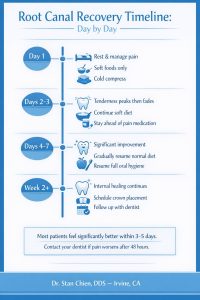
Day-by-Day Recovery Timeline
Every patient heals differently, but the general pattern of recovery after a root canal follows a predictable timeline. Knowing what to expect each day helps you gauge whether your healing is on track.
Day 1: Rest and Manage Discomfort
The first 24 hours are the most sensitive period. You may experience mild swelling, tenderness when biting, and a general ache in the jaw from keeping your mouth open during the procedure. This is all normal.
Take your pain medication before the anesthesia fully wears off. If your dentist prescribed ibuprofen or another anti-inflammatory, staying ahead of the pain is much more effective than waiting until discomfort peaks. Ibuprofen works particularly well because it addresses both pain and inflammation around the root tip. If your dentist has prescribed antibiotics, take them exactly as directed and complete the full course, even if you start feeling better.
Rest as much as possible on day one. Sleep with your head slightly elevated if you notice any facial swelling. Apply a cold compress to the outside of your cheek in 15-minute intervals to manage swelling and numb residual soreness.
Days 2 to 3: Tenderness Peaks, Then Fades
For most patients, the second and third days represent the peak of post-procedure sensitivity. You may notice that biting down on the treated tooth still feels tender, and the surrounding gum tissue may be slightly sore. This is the inflammatory response winding down, and it’s a sign that healing is progressing.
Continue taking pain medication as needed. Stick to softer foods and chew on the opposite side of your mouth. By the end of day three, many patients notice a clear improvement and start to feel more like themselves.
Days 4 to 7: Turning the Corner
By the middle of the first week, most patients feel significantly better. The dull ache is gone or barely noticeable, and you can gradually introduce more variety into your diet. You may still want to avoid crunching down on hard foods directly over the treated tooth, especially if you still have a temporary filling in place.
This is a good time to resume your normal oral hygiene routine in full. Brush gently around the treated area and floss carefully to keep the gum tissue healthy.
Week 2 and Beyond: Internal Healing Continues
Even after surface-level symptoms resolve, the bone and tissue around the root tip continue to heal internally. This process can take several weeks to a few months. You won’t feel this happening, but it’s the reason follow-up appointments and X-rays matter. Your dentist needs to confirm that the periapical tissue (the area around the root tip) is healing properly and that no lingering infection remains.
How to Eat After a Root Canal
What you eat during the first few days of recovery has a direct impact on your comfort level and healing speed. The goal is to avoid putting unnecessary pressure on the treated tooth while still getting the nutrition your body needs to heal.
Foods to Eat During Recovery
Soft, lukewarm foods are your best option during the first three to five days. Good choices include scrambled eggs, yogurt, mashed potatoes, smoothies (without seeds), soups and broths, oatmeal, soft pasta, ripe bananas and avocados, and well-cooked vegetables. These foods are easy to chew, won’t irritate the treatment site, and provide the protein and nutrients your body needs for tissue repair.
Foods and Drinks to Avoid
Certain foods and beverages can aggravate the treated tooth, dislodge your temporary filling, or slow the healing process. Stay away from hard, crunchy foods like nuts, chips, and raw carrots. Avoid sticky and chewy foods like caramel, taffy, and gummy candies, which can pull out your temporary filling. Extremely hot or cold foods and beverages may trigger sensitivity in the treated tooth. Spicy foods can irritate inflamed gum tissue. Alcohol can interfere with pain medications and slow healing. If you smoke, this is an important time to cut back or quit. Smoking restricts blood flow to the gums and significantly slows the healing process, increasing your risk of complications.
Oral Hygiene After a Root Canal
One of the most common questions patients ask is whether they can brush and floss normally after a root canal. The short answer is yes, with some minor adjustments for the first day or two.
Brushing
Continue brushing twice a day with a soft-bristled toothbrush and fluoride toothpaste. On the first night after your procedure, brush gently around the treated tooth to avoid disturbing the temporary filling. By day two or three, you can resume your normal brushing pressure.
Flossing
Floss daily, including around the treated tooth. Slide the floss gently through the contact point and along the gumline rather than snapping it into place. Good oral hygiene is one of the best things you can do to prevent reinfection and support long-term healing.
Mouthwash
An antibacterial mouthwash can help reduce the bacterial load in your mouth during recovery. If your dentist recommends a specific rinse, follow their instructions. Avoid aggressive swishing that could disturb the temporary filling.
Pain Management: What’s Normal and What’s Not
Understanding the difference between expected post-procedure discomfort and signs of a problem is one of the most important parts of root canal aftercare.
Normal Discomfort After a Root Canal
Mild to moderate soreness for the first few days is completely expected. This can include tenderness when biting down on the treated tooth, a dull ache in the jaw or surrounding teeth, slight sensitivity to temperature, and minor gum tenderness around the treatment site.
Over-the-counter anti-inflammatory medications like ibuprofen (Advil, Motrin) or acetaminophen (Tylenol) are usually sufficient to manage this level of discomfort. Your dentist may recommend alternating between the two for optimal pain control. Follow the dosing instructions on the label or as directed by your dentist, and take medication with food to reduce stomach irritation.
When Pain Is a Warning Sign
While some discomfort is expected, certain symptoms are not normal and warrant a call to your dentist. Contact our Irvine office if you experience severe or worsening pain that does not respond to over-the-counter medication, swelling that increases after the first 48 hours or spreads to your face or neck, a fever over 100.4°F, a visible pimple or bump on the gum near the treated tooth (this may indicate a developing abscess), your bite feeling significantly uneven or “high” on the treated tooth, or your temporary filling falling out or cracking.
These symptoms may indicate a complication that needs prompt attention. Early intervention is always easier and more effective than waiting.
Experiencing unusual symptoms after your root canal? Don’t wait for it to get worse.
Why You Need a Crown After a Root Canal
A root canal removes the infected pulp from inside your tooth, but the procedure leaves the remaining tooth structure more vulnerable to fracture. Without the blood supply that the pulp once provided, the tooth becomes more brittle over time. For back teeth (premolars and molars) that absorb significant chewing forces, a dental crown is typically necessary to protect and strengthen the treated tooth.
Research published in the Journal of Dental Research found that teeth without final restorations after root canal treatment were nearly three times more likely to fail compared to teeth that received a crown or filling promptly. Delaying crown placement creates a window where the temporary seal can break down, bacteria can re-enter the canals, and the tooth itself can fracture under normal chewing forces.
What About Front Teeth?
Front teeth (incisors and canines) experience less biting force than molars, so they may sometimes be adequately restored with a bonded composite filling rather than a full crown. Your dentist will assess the amount of remaining tooth structure, the location of the tooth, and your bite pattern to recommend the best restoration option.
How Soon Should You Get Your Crown?
Most dentists recommend placing the permanent crown within two to four weeks after the root canal is completed. At our Irvine practice, we offer same-day porcelain crowns, which means you can complete your root canal and receive your permanent crown in fewer appointments, reducing the window of vulnerability for the treated tooth.
If you’ve already had a root canal at our office and were told you need a crown, we covered the full crown process in our article on dental crown procedures. That guide explains each step so you know exactly what to expect.
Can a Root Canal Fail? Understanding the Risks
Root canal treatment has a high success rate. Research from the American Association of Endodontists confirms that the procedure is effective at saving natural teeth, and large-scale studies have reported tooth survival rates above 90% at the eight-year mark. But no medical or dental procedure is 100% guaranteed, and understanding the risk factors helps you take steps to protect your investment.
Common Reasons Root Canals Fail
Failure after root canal treatment is uncommon, but when it happens, the causes typically include incomplete removal of bacteria from complex or curved canal systems, a crack in the tooth root that was not visible during the initial procedure, a delay in placing the permanent crown that allows bacteria to re-enter the canals, or breakdown of the restoration (crown or filling) over time, creating a path for bacterial reinfection.
Signs of Reinfection
If your root canal tooth develops a new infection weeks, months, or even years after treatment, the symptoms often mirror what you experienced before the original procedure. Watch for returning pain or sensitivity in the treated tooth, swelling or tenderness in the gum tissue near the tooth, a pimple-like bump (fistula) on the gums that may drain pus, darkening or discoloration of the treated tooth, or a bad taste in your mouth that doesn’t resolve with brushing.
If you notice any of these signs, see your dentist promptly. A retreatment (a second root canal) or a minor surgical procedure called an apicoectomy can often resolve the issue and save the tooth.
Long-Term Care for a Root Canal Tooth
Once your permanent crown is placed and the area has fully healed, a root canal tooth doesn’t require any special maintenance beyond what you should already be doing for your overall oral health.
Daily Habits That Protect Your Investment
Brush twice a day with fluoride toothpaste and a soft-bristled toothbrush. Floss daily, making sure to clean along the gumline of the crowned tooth. Consider using an antibacterial mouthwash as part of your routine, especially if you’re prone to gum disease. If you grind your teeth at night (bruxism), talk to your dentist about a custom night guard. Grinding puts excessive force on all of your teeth, but it’s particularly risky for teeth with crowns, as the repeated stress can crack the restoration or fracture the underlying tooth structure.
Regular Dental Checkups
Continue seeing your dentist for routine cleanings and exams at least twice a year. During these visits, your dentist will check the root canal tooth with X-rays to monitor the health of the surrounding bone and confirm that the seal remains intact. Early detection of any changes means early intervention, which almost always leads to better outcomes.
A root canal tooth that receives a timely crown and proper ongoing care can last a lifetime. The key is treating it like the investment it is.
Frequently Asked Questions About Root Canal Aftercare
How long does it take to recover from a root canal?
Most patients feel significantly better within three to five days. Mild tenderness when biting may linger for up to a week, but this is manageable with over-the-counter pain medication. The internal bone and tissue healing around the root tip continues for several weeks to a few months, but this process is painless and happens beneath the surface.
Can I go back to work the day after a root canal?
Yes. Most patients return to work or school the same day or the day after their root canal. The procedure itself does not typically require significant downtime. If your dentist prescribed narcotic pain medication, you should avoid driving or operating heavy machinery until the effects wear off. Otherwise, normal daily activities are fine.
Is it normal to have a bad taste in my mouth after a root canal?
A slight medicinal taste for a day or two after treatment is normal and comes from the disinfecting solutions used during the procedure. If the bad taste persists beyond a few days or is accompanied by an unpleasant odor, swelling, or increasing pain, contact your dentist. A persistent bad taste can sometimes indicate that the temporary seal has been compromised or that there is residual infection.
How long can I wait to get a crown after a root canal?
The recommended timeframe is two to four weeks. Waiting longer than that increases the risk of the temporary filling breaking down and bacteria re-entering the treated canals. It also increases the chance of the tooth cracking under normal chewing forces. At our Irvine practice, same-day porcelain crowns can shorten this timeline significantly.
Can I exercise after a root canal?
Light activity like walking is fine on the day of your procedure. However, it’s best to skip intense workouts, heavy lifting, and high-impact exercise for the first 24 to 48 hours. Vigorous activity increases blood flow and blood pressure, which can intensify throbbing or swelling around the treatment site.
What happens if I don’t get a crown after a root canal?
Without a crown, the treated tooth is more susceptible to fracture, especially back teeth that bear significant chewing forces. The tooth may crack vertically, which often means extraction becomes the only option. Additionally, the temporary filling will eventually break down, exposing the sealed canals to bacteria and risking reinfection. Getting your permanent crown on time is one of the most important things you can do to protect the long-term success of your root canal.
Ready to protect your smile with expert root canal care in Irvine?

